
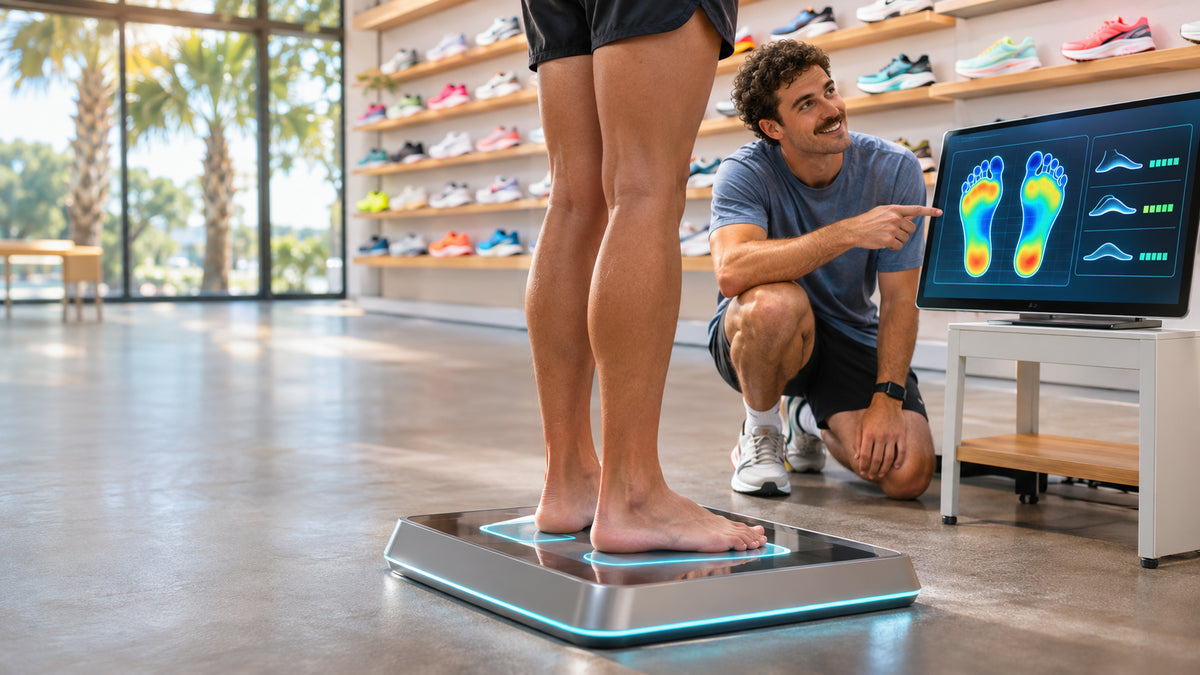
A foot analysis at Blue Sky Endurance in Mount Pleasant, South Carolina measures your arch, foot shape, pressure points and stride before you try on a single shoe. Blue Sky Endurance and The Foot Store pair a foot scan with gait analysis, so walkers, runners and athletes leave with footwear that fits the feet they actually have.
Customers come in from Charleston, Daniel Island, Isle of Palms, Sullivan's Island, Awendaw and Summerville. Some want relief from foot pain on daily walks. Others are training for a fall half marathon or a cross-country season.
Key takeaways
- A foot analysis combines a foot scan with gait analysis to measure arch height, foot shape, pressure and how you move.
- Your results point to a type of shoe, such as stability or neutral cushioning, not one popular model.
- Foot size changes over time and varies by brand, so both feet get measured for length and width at every visit.
- Insoles, arch supports or a referral for custom orthotics can help when foot pain lasts after a proper fit.
- The Mount Pleasant team includes a certified pedorthist from The Foot Store, which has fitted Lowcountry feet for more than 25 years.
How a foot analysis works in Mount Pleasant
Every fitting at Blue Sky Endurance follows five steps, and all evaluations start with a conversation about how you use your feet. The process takes the guesswork out of shopping online or buying the shoe a friend loves.
- Talk about your goals. Staff ask about walking, running, racing, standing at work, past injuries and the shoes that have or haven't worked for you.
- Take foot measurements. The foot scan records length, width and arch height for each foot, taking two measurements because most people have one foot slightly larger than the other.
- Review pressure and shape. The scan shows where your weight lands when you stand, from heel to ball of foot.
- Perform gait analysis. You walk or jog while staff watch your ankles, knees and footstrike.
- Try several shoes. You compare options side by side and decide which one feels right.
This is a personal fitting, not a sales script. The goal is to give you good options and explain the difference between them.
What your foot scan shows
A foot scan turns your feet into four readings: arch height, foot shape, pressure distribution, and length and width. Each one narrows the list of shoes worth trying.
Arch height: low, medium or high
Arch height affects how far your foot rolls inward when it lands. A low or flexible arch often pairs well with a stability shoe. A high, rigid arch usually needs softer cushioning to absorb impact.
Foot shape and width
Some feet are wide at the forefoot and narrow at the heel. Others have long toes, bunions or a high instep. Shape tells staff which shoes will fit without pinching or slipping.
Pressure points
Pressure mapping shows where your weight concentrates, such as the heel, the ball of the foot or the outside edge. Heavy forefoot pressure can go along with pain under the toes, and heel pressure can relate to plantar fasciitis.
Length and width of each foot
Many adults haven't had their feet measured in years, yet foot size can change with age, pregnancy and weight. Sizing also varies between brands and even between models, so the scan is a starting point for fit, not a final answer.
Visual gait analysis: how you move matters
Visual gait analysis watches your stride in motion, which a standing foot scan can't capture. Staff look for a handful of common patterns as you walk or jog.
- The arch collapses and the ankle rolls inward after landing, which is called overpronation.
- The foot stays on its outer edge and absorbs less shock, which is called supination.
- The foot rolls slightly inward and pushes off evenly, a neutral pattern most shoes are built around.
- You land on your heel, midfoot or forefoot, which changes how much cushioning you need and where.
- Your cadence and stride length show whether you reach too far ahead of your body.
Mechanics change with speed and fatigue. If you train with a GPS watch, cadence and ground contact data from your running watch and accessories add detail to what staff see in the store.
Matching your results to the right shoes
Your analysis points to a type of shoe, and from there you try models that match the shape of your foot. The run department carries road, trail, walking and racing footwear for every stage of training.
- Overpronation or a low arch usually leads to stability shoes with a firmer inner edge.
- A high arch or supination usually leads to neutral shoes with soft, thick cushioning.
- A wide forefoot calls for a roomier toe box or a wide size.
- Walking and standing all day call for steady cushioning and a secure heel.
Compare women's running and walking shoes and men's running and walking shoes from On Running, Nike, Adidas and Mount to Coast. Oofos Footwear recovery slides give tired feet a cushioned break after a long run or a full shift.
Foot pain, insoles and custom orthotics
Foot pain that lingers after a shoe change deserves a closer look. The Foot Store has helped Mount Pleasant residents with sore arches, plantar pain and hard-to-fit feet for more than 25 years, and its certified pedorthist still works with customers.
Insoles and arch supports add support under the arch and can spread pressure more evenly. If your scan shows a severe imbalance, staff may suggest a podiatrist visit to discuss custom orthotics or custom insoles. Bring any orthotics you already wear, since shoes with a removable insole make room for them.
Sport-specific fit for spikes and cycling shoes
Your foot analysis carries over to race day. Track athletes can compare track spikes and cross-country runners can try cross-country spikes from Nike and Adidas, checked against the length and width from your scan.
Cyclists and triathletes need a snug heel and a stiff sole for power transfer. Cycling shoes from Shimano, Pearl Izumi and Louis Garneau come in widths that suit different foot shapes, and the bike team can help you set up the rest of your gear.
When to get your feet analyzed again
- Every 300 to 500 miles, when your running shoes wear out
- After an injury, a pregnancy or a large change in weight
- When you start a new sport or training block
- When a shoe you've worn for years suddenly feels different
Frequently asked questions
How much does a foot analysis cost at Blue Sky Endurance?
The foot scan and gait analysis are part of the shoe fitting process at the Mount Pleasant store. Call ahead to confirm current details and the best times to visit.
Where can adults get their feet measured in Mount Pleasant?
Adults can get their feet measured at Blue Sky Endurance and The Foot Store in Mount Pleasant, South Carolina. Staff measure the length, width and arch of both feet and recommend footwear for walking, running and everyday comfort.
What is the difference between a foot scan and gait analysis?
A foot scan measures your feet while you stand still, including arch height, shape and pressure points. Gait analysis watches how your feet, ankles and knees move while you walk or run.
Do I need custom orthotics after a foot analysis?
Most people don't. A well-fitted shoe, sometimes paired with an over-the-counter insole, solves many comfort problems, and staff will tell you when a podiatrist visit makes sense.
What should I bring to my foot analysis?
Bring the shoes you wear most, any insoles or orthotics, and the socks you train in. If you run, wear clothes you can jog in for the gait analysis step.
Get your foot analysis and shop your next pair
Your feet carry you through every neighborhood walk, every cross-country meet and every mile over the Ravenel Bridge. Stop by Blue Sky Endurance in Mount Pleasant for a foot scan and gait analysis, then shop the shoes your results point to.
- Shop women's running and walking shoes matched to your arch and width.
- Shop men's running and walking shoes built for your stride.
- Gear up for the season with track spikes, cross-country spikes or cycling shoes.
- Test your new shoes at free group runs and rides through the Blue Sky Endurance community.
Your goals are personal. Your shoes should be, too.